· Updated · 9 min read · Omkar Satpute and Milind Soni
Managed Hermes Agent hosting compared, plus the free option
Nous now hosts Hermes itself; Hostinger, xCloud, Cloudways, and Elestio sell managed Hermes. Prices, what a managed workspace means, and a no-server option.
Managed Hermes means someone else runs the agent and keeps its folder alive. Nous Research now does that itself with Hermes Cloud, one agent included with each paid Nous Portal plan from $20 a month, and Hostinger, xCloud, Cloudways, and Elestio sell the same thing from $4.99 a month, and an independent Hermes cloud charges $49. Pay for it if you want Hermes on Telegram or WhatsApp around the clock without being its sysadmin. The option most lists skip is an agent that never needed a server: MausBot runs on the Mac, PC, or Ubuntu box you already own, can run Hermes as one of its 16 engines, lets you set approvals per bot, and adds a Cloud plan or your own server if you ever want always-on.
What "managed Hermes" is
Hermes Agent is Nous Research's open-source agent: MIT licensed, about 263,000 stars, launched February 25, 2026. It is one always-on agent that learns its own skills, remembers across sessions, and answers you on Telegram, Discord, Slack, WhatsApp, Signal, email, and a dozen more gateways. The README says to run it on a $5 VPS. Managed Hermes is someone else doing that: they run the process, keep it updated, and hand you a dashboard and a pairing code.
Two things make the Hermes market different from OpenClaw's. First, the project sells hosting itself: Hermes Cloud on Nous Portal is "an always-on autonomous agent in the cloud," one included with each paid Portal plan, its compute billed daily from your Nous credit. Second, Hostinger gave the category its name when it launched Managed Hermes Agent on June 9, 2026, and it owns the search results for it.
And what a "Hermes managed workspace" is
Nobody sells a product by that name. Three real things collide in the phrase:
- The state folder. Hermes keeps everything in
~/.hermes:config.yaml,SOUL.md, memories, skills, cron jobs, sessions, and a SQLite index. The configuration docs use "workspace" only for the Docker mount and the working directory whereAGENTS.mdis read. - Hermes Cloud's wording. Nous describes the hosted agent as living in a "dedicated, persistent workspace" where files, memory, and configuration build up over time. That is the state folder, hosted.
- Hermes Workspace, the UI. A third-party web interface for Hermes with about 6,800 stars, which Hostinger also sells as a VPS template. Its own managed cloud is listed as coming soon.
Whichever one you meant, the hosts below give you the thing people actually want: a Hermes whose folder persists on a server someone else keeps running.
Why people pay for it
- Being the sysadmin. The install is one curl command, and the installer sets up Python 3.14 for you, but a Hermes that lives on a server needs a process that survives reboots and a gateway set up for each chat app. Hostinger's tutorial recommends 2 CPUs and 8 GB; smaller boxes work with API models.
- Exposure. A gateway or web UI you open to the internet is yours to lock down. Hermes's security docs lean on DM pairing codes, allowlists that deny everyone when none is set, and a container or sandbox backend for production gateways. A host that keeps the UI off the public internet is worth paying for.
- Credits and keys. Nous Portal plans, Plus at $20, Super at $100, and Ultra at $200 a month, include Hermes usage up to daily, weekly, and monthly limits, and usage beyond them is billed to credits. Other hosts either bundle credits (Hostinger) or make you bring a key (xCloud, Cloudways). Outside Nous's own plans, the model bill is separate from the hosting bill.
- Windows. Native Windows is a first-tier platform now, and Hermes Desktop ships for macOS, Windows, and Linux. But an always-on Hermes on a Windows laptop is still a laptop that has to stay open.
Managed Hermes hosts, side by side
Prices are what each provider's page showed on November 15, 2026. Some hosts were running Black Friday offers that day, so check again before you buy. Model tokens or credits are extra everywhere except within a Nous Portal plan's usage limits.
| Host | Price | What runs where | Notes |
|---|---|---|---|
| Hermes Cloud (official, Nous Portal) | One Cloud agent with each paid Portal plan: Plus $20, Super $100, Ultra $200/mo; compute billed daily from Nous credit | Nous runs the agent; 4 GB RAM with 25 GB disk (Plus), 4 GB with 100 GB (Super), 8 GB with 100 GB (Ultra) | Needs $2 in credits or a subscription to deploy; Telegram, Discord, Slack, Email, CLI; scales to zero when idle; inference billed separately |
| Hostinger Managed Hermes Agent | $4.99/mo Black Friday promo on a 24-month prepaid term, renews at $11.99/mo | Isolated container, security managed | Visual interface, CLI, Telegram pairing, Discord, Slack, WhatsApp, Signal, email; AI credits included, or use your ChatGPT subscription |
| xCloud | From $24.99/mo (6 GB), the same every month; plans up to $379.99 | Managed server | Bring your own model keys; no markup on LLM costs |
| Cloudways Managed AI Agents | $9.99, $19.99, $39.99, $79.99/mo | Dedicated instance per customer | Bring your own keys; Hermes listed beside OpenClaw, though the page's FAQ still names OpenClaw only |
| Elestio | From $16/mo, billed hourly | Dedicated instance | Backups, auto-updates, SSL, VS Code and terminal in the browser |
| Railway template | About $5 to $10/mo in compute and storage, per the template | Your Railway project | A third-party template, not Railway's or Nous's; you own updates |
| OpenClaw Launch | Lite $3 first month then $6/mo; Pro $20/mo | 1 vCPU / 2 GB or 2 vCPU / 4 GB | AI credits bundled: $1/mo on Lite, $10/mo on Pro |
| FlyHermes (hermes-agent.ai) | $49/mo, or $39/mo billed yearly | Their servers | States it is independent and not affiliated with Nous Research |
Three things to check before you pay. The renewal: Hostinger's $4.99 promo renews at $11.99. The credits: Hermes Cloud needs $2 in credits or a subscription before it deploys, and its compute is metered and billed daily from your credit. And the migration path: Hostinger's support page says the one-time switch to a VPS is only offered within 30 days of purchase and does not move your setup, and that migration between Managed Hermes and Managed OpenClaw is no longer available in either direction.
The option that needs no server
Every host above exists because a Hermes that answers Telegram at 3 a.m. has to live on a server. MausBot starts from the other end. It is a chat app on the computer in front of you, where every contact is a bot with its own model, its own computer, and approvals you set per bot. Bots run one of 16 agent engines, Hermes among them, with the plan or API key you already have. For the desktop app there are no credits to top up and no renewal. The app is free and Apache 2.0 licensed.
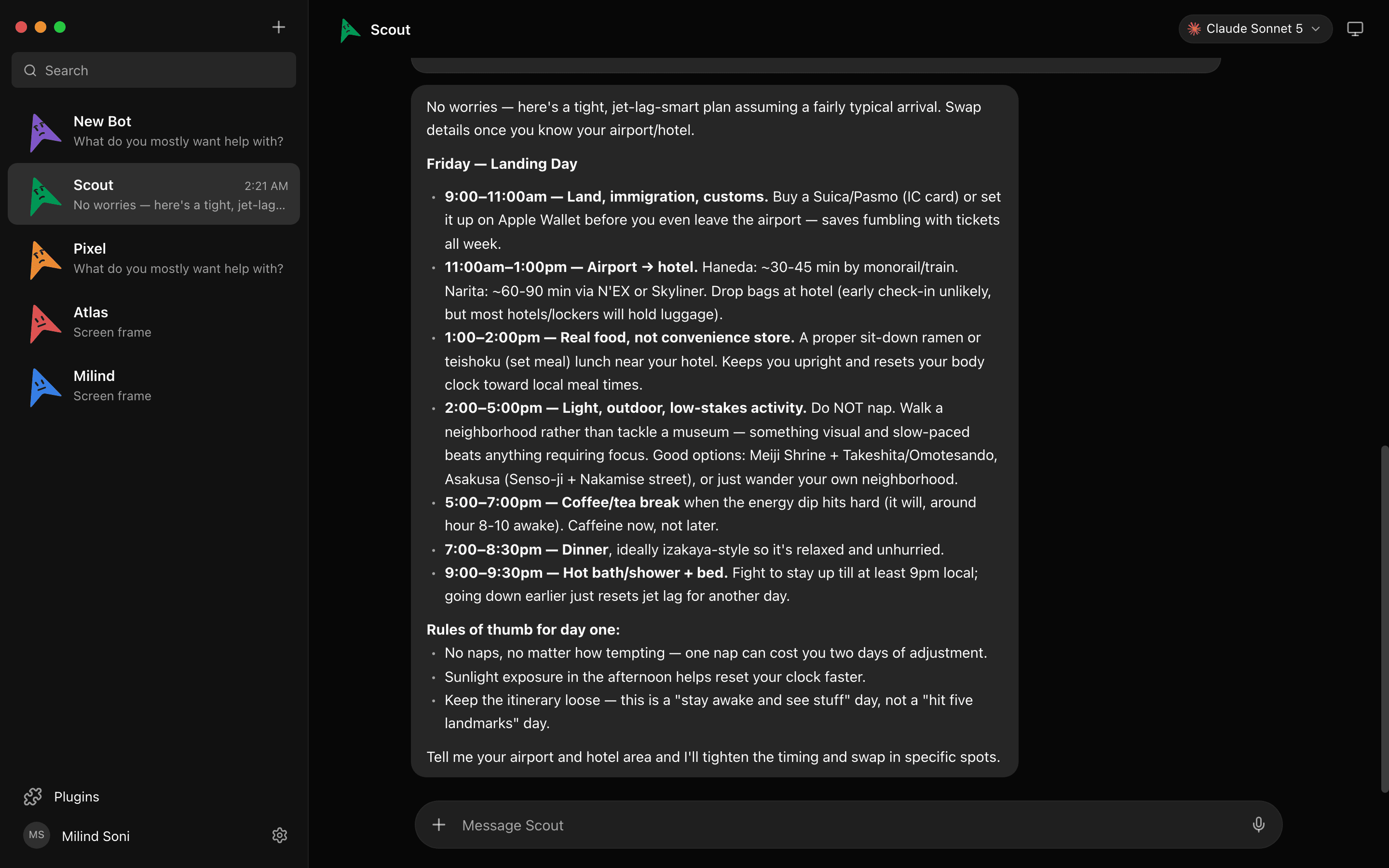
Try it. This is a live simulation of four bots working in parallel:
A simulation. Pick a bot, or type to it. The replies are scripted; the real thing runs on your own machine.
Approvals you set per bot
Hermes has good approval modes: by default a helper model approves low-risk commands, denies dangerous ones, and asks you about the rest, and --yolo skips the prompts. Out of the box, Hermes is the stricter of the two. MausBot starts every bot at Full access, where the engine runs in its most permissive mode and real questions and missing sign-ins still reach you. Switch a bot or a thread to Ask for approval, Auto-accept edits, or Approve for me, and set its email, messages, posts, and payments to Ask every time.
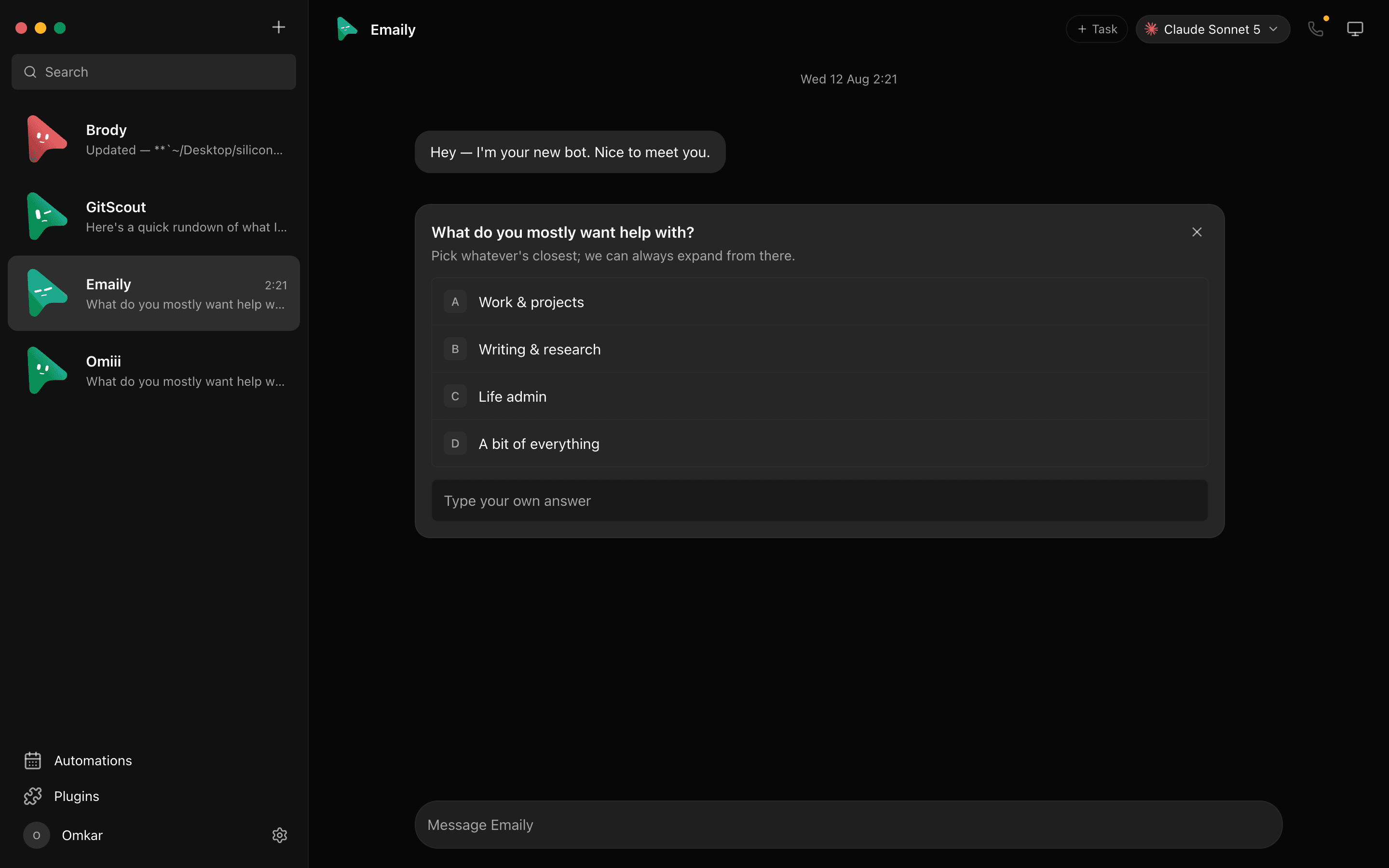
A team, not one agent with profiles
Hermes is one agent; profiles let you keep several isolated ones, each in its own home folder. MausBot is a sidebar of them. One bot on Claude Code reads your inbox, one on Codex reviews pull requests, one on Hermes runs your research, each in its own chat with its own notes, and an About me every bot reads. Bots share group chats, and one can be your Chief of Staff and hand work to the others.
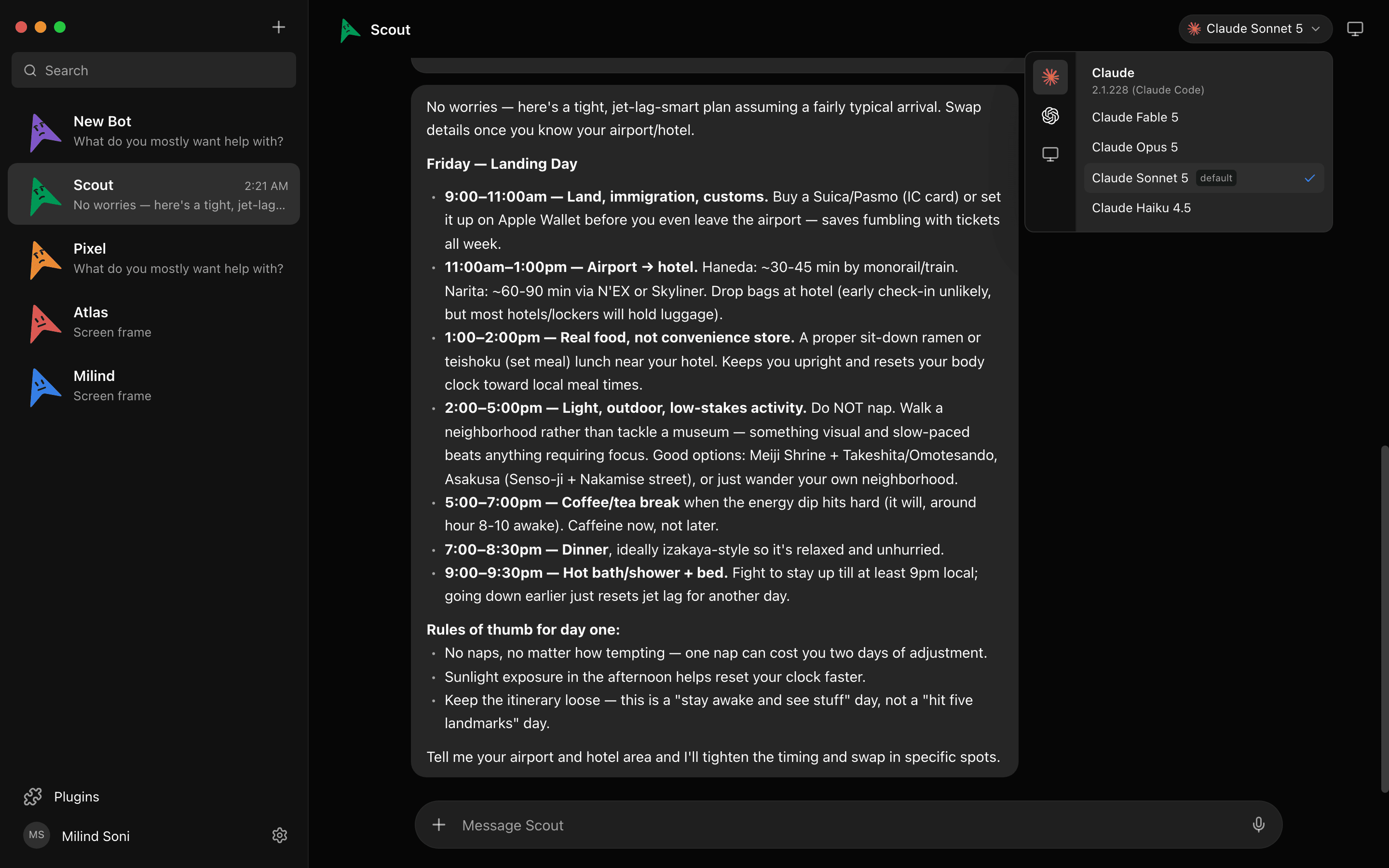
Always-on, on a Cloud plan or your own server
The honest case for a server is that a closed laptop runs nothing. MausBot answers that in two ways. On a Cloud plan, from $19 a month, your bots get an always-on cloud machine and cloud computers with a live desktop you can watch or take over. Or self-host for free: on a fresh Ubuntu 22.04 or 24.04 server with a domain, one installer command installs MausBot in Docker and ends with HTTPS on your domain. The VPS guide lists every check. The Pro plan, at $49 a month, is the middle Cloud plan for one person.
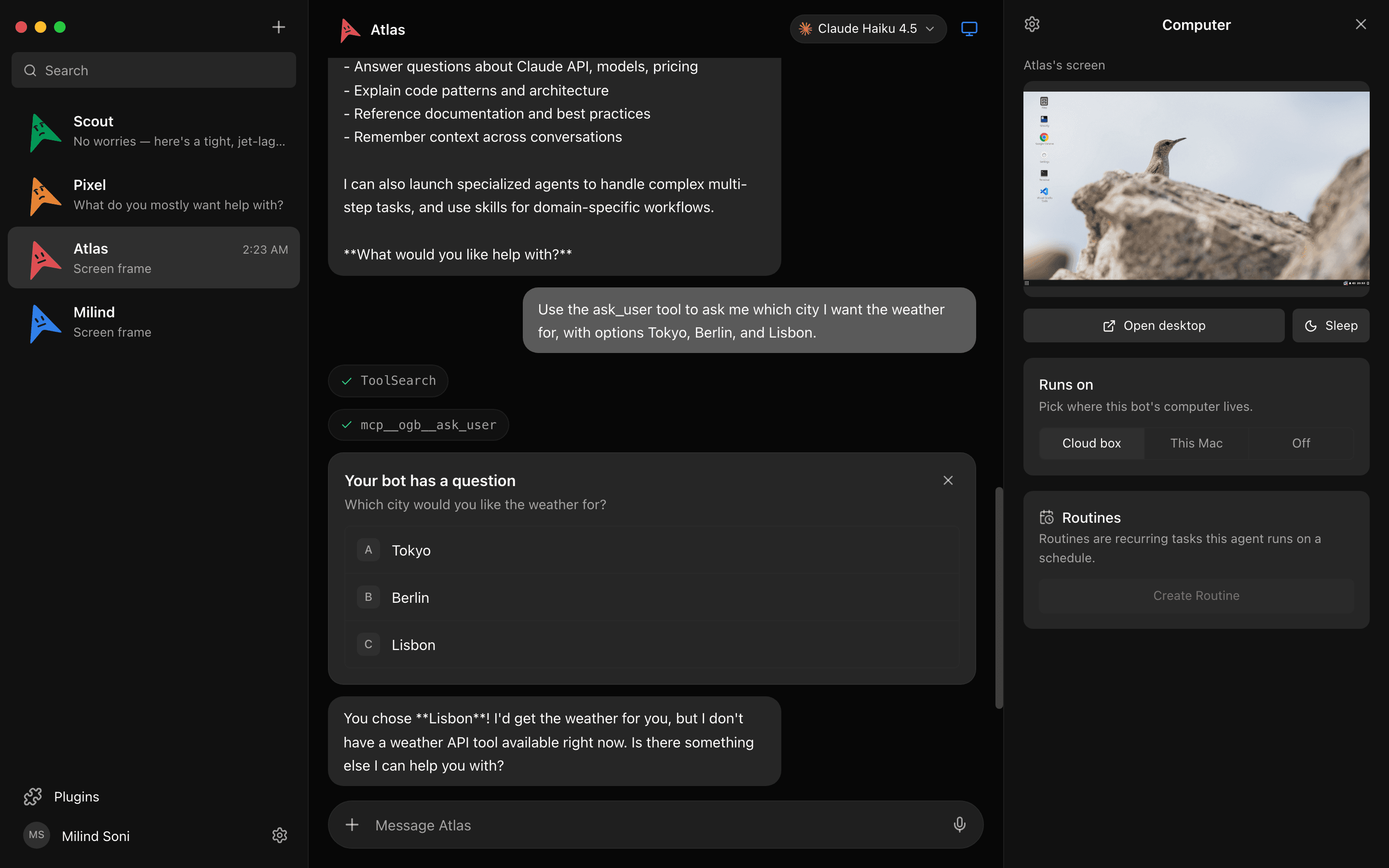
Hermes Agent vs MausBot
| Hermes Agent | MausBot | |
|---|---|---|
| Shape | One always-on agent you reach through chat apps | A chat app of bots, each with its own model and computer |
| Where it runs | A server (yours, a host's, or Hermes Cloud), or your own machine with Hermes Desktop | Your own computer or server; cloud computers with a live desktop on a Cloud plan |
| Models | Nous Portal, OpenRouter, OpenAI, Anthropic and more; local servers | 16 agent engines, Hermes among them, plus API and local models; chosen per bot |
| Before a shell command runs | Smart by default (a helper model judges risk), manual, or off; --yolo skips the prompts | Full access by default; Ask for approval, Auto-accept edits or Approve for me per bot or thread |
| Multiple agents | Profiles: several isolated agents, each with its own home folder | As many bots as you like, in group chats, with a Chief of Staff that hands out work |
| Chat-app channels | Telegram, Discord, Slack, WhatsApp, Signal, email, and more | Slack on Pro, Max and Team plans; otherwise its own desktop, iPhone and Android apps |
| Always on | Yes, that is the point | Yes on a Cloud plan from $19 a month, or self-hosted free on your own server |
| Desktop app | Hermes Desktop for macOS, Windows, Linux | macOS, Windows, Ubuntu; iPhone and Android apps |
| License, stars | MIT, ~263k | Apache 2.0, apart from an enterprise/ folder |
What managed Hermes still does better
Three things. Hermes lives inside the messaging apps you already use; MausBot is its own desktop app with iPhone and Android apps, not a contact in Telegram. Hermes creates its own skills from experience and improves them as it uses them; MausBot bots keep editable Markdown notes per bot and an About me every bot reads, which is memory, not self-written skills. And Hermes has a far larger community, with about 263,000 GitHub stars. If the job is "text my agent and it figures out the rest," managed Hermes is the right purchase; pick a host that keeps the web UI private and leave approvals on.
Which one should you choose?
Choose Hermes Cloud if you already pay for Portal and want the official path with one bill. Choose Hostinger if you want the lowest promo price with a dashboard and can live with the renewal. Choose xCloud or Cloudways if you want your own keys, and Elestio if you want backups and auto-updates on a dedicated instance.
Choose MausBot if you want an agent today on the computer you already own, want to choose per bot when it asks before it acts, want several bots on several models with Hermes as one of them, or want always-on without running a gateway yourself. Our self-hosted agents roundup puts Hermes and MausBot side by side with eight others, and the OpenClaw version of this post covers the other big self-hosted agent.
Frequently asked questions
- What is a Hermes managed workspace?
- Not a product name. Inside Hermes Agent the state folder is ~/.hermes (config.yaml, SOUL.md, memories, skills, cron, sessions), or %LOCALAPPDATA%\hermes on native Windows, and in the configuration docs /workspace is the Docker mount for your working directory. Hermes Cloud's page describes a dedicated, persistent workspace where files, memory, and configuration stay with the hosted agent. And Hermes Workspace, capital W, is a separate third-party web UI on GitHub. If you searched for a managed workspace, you almost certainly want hosting: someone running Hermes and keeping that folder alive.
- Is there an official hosted Hermes Agent?
- Yes. Nous Research runs Hermes Cloud through Nous Portal: each paid plan, Plus at $20, Super at $100 and Ultra at $200 a month, includes one Cloud agent that runs around the clock and scales to zero when idle. Compute is billed daily from your Nous credit, with inference on top. Unlike OpenClaw, the project itself sells hosting.
- How much does managed Hermes cost?
- From $4.99 a month at Hostinger on a two-year Black Friday promo ($11.99 on renewal) to $49 a month at FlyHermes. Hermes Cloud comes with a Nous Portal plan from $20 a month; its compute is billed daily from your credit, and Nous shows the per-day price in the Portal rather than on its public page. Every option bills model usage separately or through credits.
- Is Hermes Agent safe to self-host?
- It ships real controls: approval modes, hard-blocked catastrophic commands, DM pairing codes, allowlists, and a recommendation to run production gateways in a container or sandbox backend. Keep it behind Tailscale, keep DM pairing and allowlists on, and do not turn approvals off.
- Is MausBot a managed Hermes?
- No. It is a different open-source project with a different shape: a desktop chat app where each bot has its own model, computer, and approval level, and Hermes is one of its 16 agent engines. It needs no server for the desktop case. For always-on, a Cloud plan from $19 a month gives your bots an always-on cloud machine, or a one-command installer runs MausBot free on your own Ubuntu server with a domain, in Docker with HTTPS.
- Can MausBot use Hermes skills or reach Telegram?
- MausBot can run Hermes itself: Hermes is one of its 16 agent engines, so a Hermes bot can share group chats with Claude Code and Codex bots. MausBot does not run Hermes's chat gateways, though; you talk to that bot in MausBot's desktop, iPhone, and Android apps. If Telegram or WhatsApp must be the interface, use Hermes's own gateway.
Get started in two minutes
No server and no credits. Download for macOS, Windows, or Ubuntu, let MausBot install and sign in Claude Code or Codex, or pick Hermes as a bot's engine, and meet your first bot. Or read the source on GitHub first. The app is free; Cloud plans from $19 a month are optional. See the features list.
This post is based on the products as they were on . Products change. If something here is out of date, tell us and we will correct it.